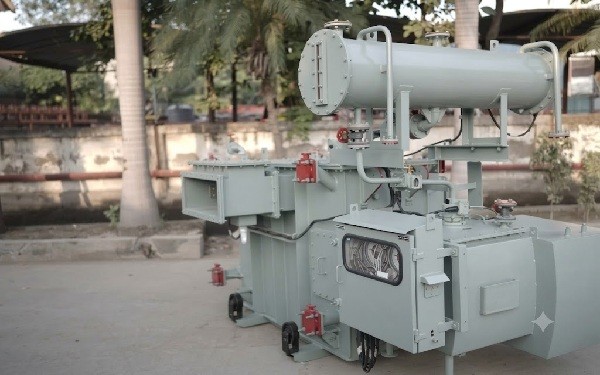
A distribution transformer is an electrical device that steps down medium-high voltages (such as 11 kV or 33 kV) from utility lines to safe, low utilization voltages (like 415V or 230V) for homes, offices, and small industries. It acts as the final voltage conversion point in a power delivery network.
Working Principle
Mutual Induction: Operates via an alternating magnetic field created by the primary winding that induces a voltage in the secondary winding.
Step-Down Function: Features fewer turns on the secondary coil than the primary coil to lower the voltage output.
High Efficiency: Maintains high operational efficiency, usually between 98% and 99%.
Key Components
Core: Made of silicon steel to channel magnetic flux efficiently.
Windings: Copper or aluminum coils (primary and secondary) that carry the current.
Insulating Tank & Oil: Houses the core and coils; oil acts as both an electrical insulator and a liquid coolant.
Bushings: Insulated terminals connecting the external power lines to the internal windings.